
Moving heads, PAR lights and wash fixtures can all add colour to an event, but they solve different lighting problems. The best choice depends on whether you need movement and aerial effects, economical fixed coverage, or a broad and even field of light. This guide helps turn those creative goals into a practical equipment brief.
1. Quick comparison: moving head vs PAR vs wash light
A moving head pans and tilts under control, so it can reposition a beam during a show. Depending on the model, its optical system may be designed as a spot, beam, wash or hybrid. A PAR is normally a fixed-position fixture whose output and colour can be controlled; many LED PARs are used to wash stages, walls or scenic elements. A wash light describes an optical purpose: producing a broad, soft-edged and relatively even field. Wash fixtures may be fixed or mounted in a moving-head body.
| Fixture | Beam and coverage | Control | Often suits | Planning trade-off |
|---|---|---|---|---|
| Moving head | Repositionable; spot, beam, wash or hybrid depending on optics | Pan, tilt and other functions; usually DMX modes | Shows, dance floors, stages and dynamic cueing | More programming, rigging clearance and maintenance considerations |
| LED PAR | Fixed aim; beam angle and edge depend on lens design | Colour, dimmer and effects; often standalone and DMX modes | Stage colour, uplighting and repeatable area coverage | Each fixture covers only where it is aimed |
| Wash fixture | Broad, soft field intended for even coverage | Fixed or moving; some models add motorised zoom | Performers, scenery, backdrops and audience areas | Usually less suitable for sharp gobos or narrow aerial beams |
These labels overlap. A moving head can be a wash light, and an LED PAR can be used as a wash. Compare the exact beam angle or zoom range, photometric data, colour system, control modes, noise specification, environmental rating and mounting instructions instead of choosing from the product name alone.
2. What moving heads do
A moving head places its light engine in a motorised yoke. Pan moves horizontally and tilt moves vertically, allowing the console operator to redirect the output and build position cues. This makes moving heads useful when the design needs changing focus points, movement through haze, performer highlights or multiple looks from the same fixture position.
The optical subtype matters. A spot generally creates a more defined beam and may project gobos or patterns. A beam is designed for a very narrow aerial shaft. A wash spreads a softer field over a larger area. Hybrid fixtures combine some of these functions, but their compromises and zoom ranges vary. CHAUVET Professional’s moving wash overview distinguishes broad, soft-edged wash output from the harder edge associated with spot/profile fixtures.
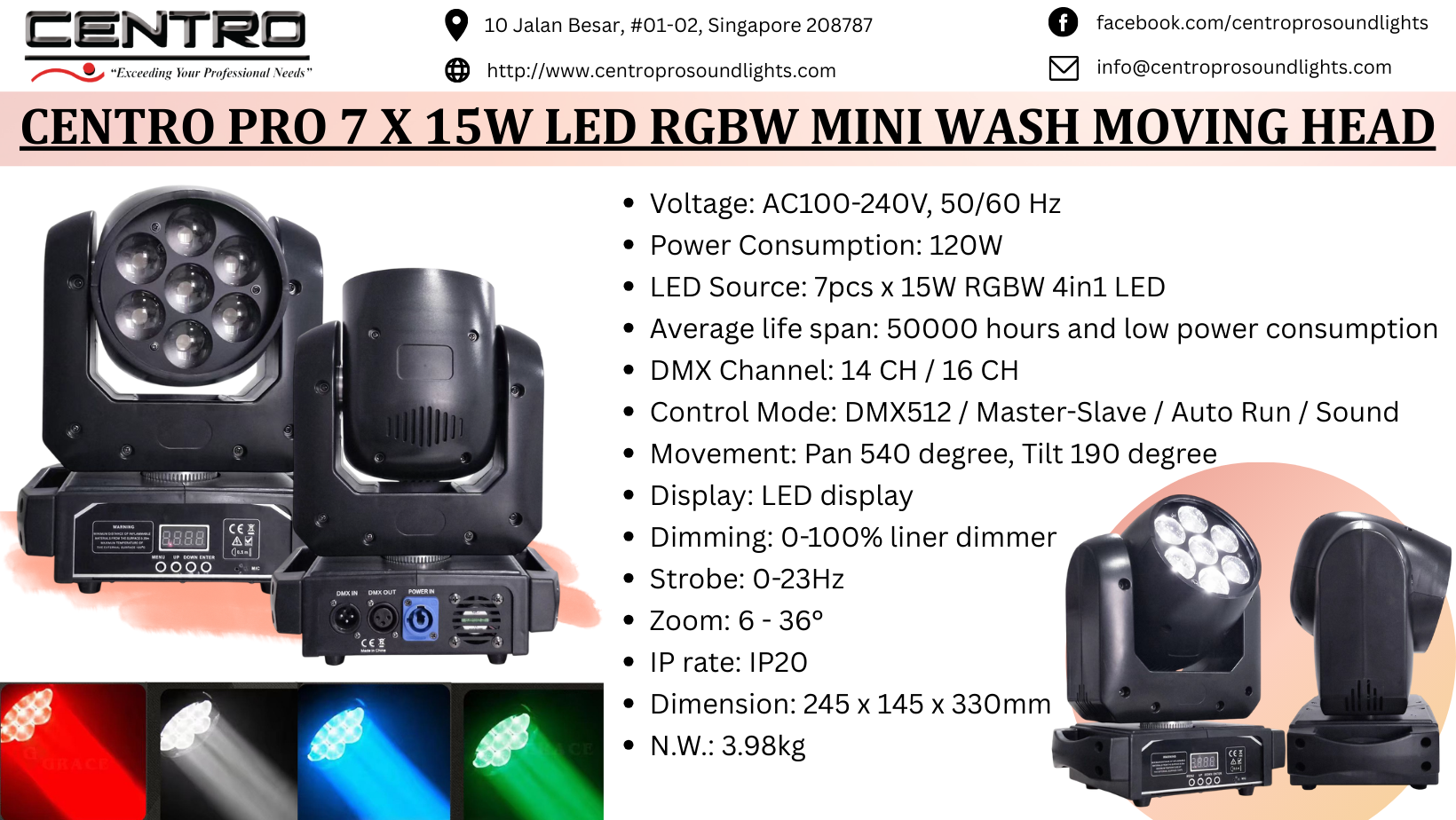
More functions normally mean more control channels and more programming. A basic mode may expose a compact set of controls, while an extended mode can add fine pan/tilt, colour zones, zoom, focus, prism, gobo or timing channels. Check the manual and patch every fixture so its occupied DMX addresses do not overlap. Browse CentroPro’s LED moving head category and compare examples such as the Centro Pro mini wash moving head and Centro Pro beam moving head. Confirm current specifications and suitability before ordering.
3. What PAR lights do
A PAR-style fixture is a practical building block when the light can stay aimed at one area. LED versions commonly combine several colour emitters, electronic dimming and preset or DMX operation in a compact body. They can colour a backdrop, uplight a wall, provide side or back light, or create several overlapping pools across a stage.
PAR does not guarantee one beam shape. Lens angle, distance and fixture spacing determine how wide each pool becomes and whether adjacent pools blend evenly. A narrow unit throws a smaller, more concentrated pool; a wider unit covers more area but distributes its output across that area. Before deciding quantity, sketch the throw distance and target dimensions, then review the manufacturer’s beam angle or photometric chart where available.
Fixed fixtures can reduce programming and mechanical complexity, but their focus cannot change during a scene without manual repositioning. They are often useful for base coverage while moving fixtures supply motion. See the LED PAR and wash category and the Centro Pro RGBW LED PAR can as catalogue starting points.
4. What wash lights do
A wash light is chosen for smooth area coverage rather than a sharply defined image. It can illuminate performers, scenery, dance floors or architectural surfaces with a broad field of colour. A fixed wash is aimed like a PAR, while a moving wash can pan, tilt and sometimes zoom from a tighter field to a wider one.
Evenness is as important as headline output. Look for the usable zoom or beam range, field quality, colour mixing, dimming behaviour and the distance at which the fixture will operate. Some wash models provide colour zones or pixel effects; others prioritise uniform colour. Some include quiet or adjustable fan modes for theatre, worship or broadcast settings, but this must be verified model by model. The CHAUVET Rogue R1 Wash documentation is one manufacturer example showing how zoom changes a fixture from a narrower pool to broad stage coverage.
5. How to choose for your venue and programme
Start with the visual job
- Corporate speech or panel: begin with clean, stable illumination for people and backgrounds. Fixed PAR/wash fixtures may cover the essential areas; add movement only when it serves the programme.
- Band or performance stage: combine an even base wash with selected moving spots, beams or washes for cue changes and musical accents.
- Dance floor or show: moving heads can create directional energy and aerial looks, while fixed units maintain colour on scenic and audience areas.
- Architecture or backdrop: prioritise beam spread, fixture spacing, colour quality and access. A fixed wash or PAR may be simpler than motorised movement.
Measure coverage and throw
Record the width, depth and height of the target, plus the available mounting distance. A wide beam close to a backdrop behaves differently from the same beam at a long throw. If people must be lit for cameras, consider colour rendering, white-light range, refresh rate and flicker performance in addition to visual colour effects.
Check the operating environment
Indoor equipment should not be assumed safe for rain or exposed outdoor use. Verify the exact IP rating, allowed orientation, ambient-temperature range and weather precautions in the manual. Consider fan and motor noise in sound-sensitive rooms. Confirm venue limits for haze, overhead equipment and access before designing aerial effects.
Compare the total system cost
Fixture price is only part of the budget. Include suitable clamps, safety bonds, stands or truss, power and data cabling, control hardware, cases, setup time and an operator able to program the intended looks. A smaller number of feature-rich fixtures is not automatically better than a larger, simpler wash system; choose the combination that completes the visual jobs reliably.
6. Plan control, rigging and power before purchase
List every fixture and its selected DMX mode, channel footprint and starting address. ADJ’s myDMX guide illustrates that each patched fixture needs a unique start address and occupies a defined range of channels. Leave room in the universe for the mode you will actually use, and verify connector type and network requirements.
For moving heads, allow the full pan/tilt envelope so the body cannot strike truss, scenery or cables. Every overhead installation must follow the exact fixture and mounting-hardware instructions, use rated components, and be completed by a competent person familiar with the load and venue requirements. Manufacturer guidance such as the CHAUVET mounting manual calls for secure installation and a suitable safety cable for overhead mounting.
Calculate power from the manufacturer’s stated consumption rather than LED-source wattage. Check available circuits, inrush, power-link limits and connector ratings. Keep power and data runs protected from traffic, and terminate or configure control lines as specified. Schedule a focus and programming session with the actual rig instead of leaving the first full test until doors open.
7. Build a useful lighting quotation brief
Send more than a fixture count. A useful brief includes:
- venue, event date, indoor/outdoor conditions and setup access;
- stage, backdrop, dance-floor and audience dimensions;
- required looks: even wash, performer focus, patterns, beams, movement or camera-friendly white light;
- mounting positions, throw distances and any venue rigging restrictions;
- existing console, DMX/network connections and operator experience;
- noise, weather, power and transport constraints;
- equipment already owned and an approximate purchase budget.
Compare a balanced lighting package
Browse CentroPro’s Stage Lighting Equipment, then send your lighting brief to CentroPro to request current specifications, price, availability and applicable commercial terms.